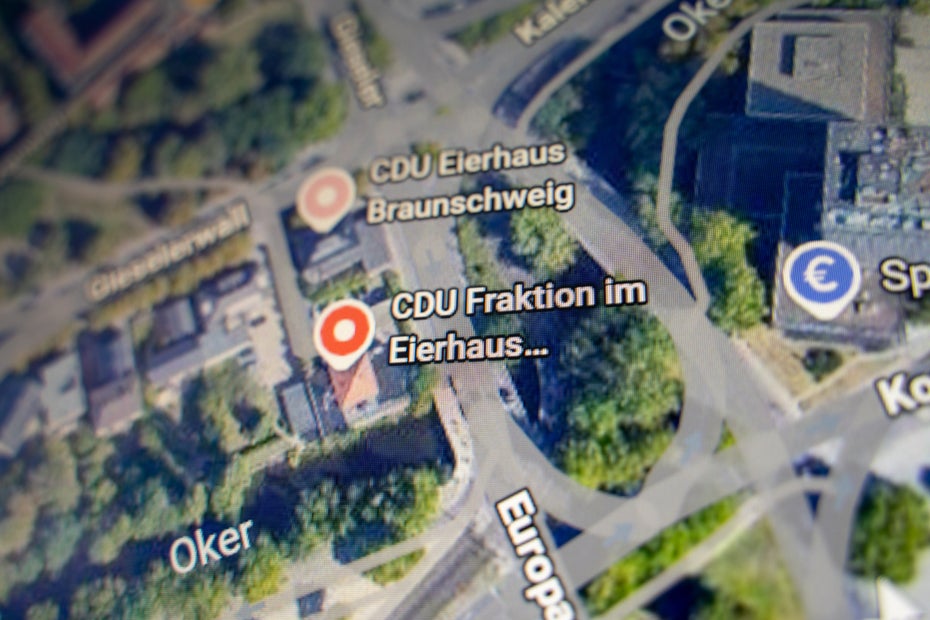
The Curious Case of the CDU 'Eierhaus': More Than Just a Google Maps Prank?
In a bizarre and widely publicized incident, numerous offices of Germany's Christian Democratic Union (CDU) across the country found their official Google Maps listings altered, suddenly appearing with the rather curious designation "Eierhaus." This digital alteration, affecting locations from state parliaments to local party branches, sparked a nationwide conversation: was it a mere juvenile prank, a pointed political statement, or a nuanced blend of both? The phenomenon of cdu eierhaus google searches surged as the public sought to understand this peculiar digital vandalism.
What started in the eastern German states of Saxony, Saxony-Anhalt, and Thuringia, quickly spread, eventually impacting major urban centers like Hamburg, Berlin, and various locations in Brandenburg. The incident highlights the growing vulnerability of organizations to digital manipulation and the evolving nature of political protest in the age of crowd-sourced information.
The Digital Vandalism: Unpacking the "Eierhaus" Renaming Across Germany
The extent of the "Eierhaus" phenomenon was truly remarkable. It wasn't just a handful of isolated incidents; instead, it represented a coordinated, albeit anonymous, effort that touched numerous CDU locations. From the historic Dresden State Parliament building to local party headquarters in smaller towns, the digital footprint of the CDU was temporarily rebranded.
- Eastern German Epicenter: Initially, reports emerged from Saxony, Saxony-Anhalt, and Thuringia. CDU offices in places like Eisleben, Delitzsch, and Erfurt were among the first to be identified with the "Eierhaus" suffix. Even the prestigious Landtag (State Parliament) in Dresden fell victim to the renaming.
- Nationwide Spread: The digital defacement wasn't confined to the east. The CDU headquarters in Hamburg, for instance, prominently displayed "CDU Eierhaus" in its address line on Google Maps. Berlin also saw several party offices affected, including the CDU district association in Berlin-Kreuzberg, the CDU faction in the Treptow-Köpenick district assembly, and the local association Neu-Tempelhof.
- Brandenburg's "Buntes Eierhaus": In Brandenburg, the pranksters added another layer of peculiarity. While many locations simply became "Eierhaus," the state headquarters in Potsdam was listed as "CDU buntes Eierhaus - Landesverband Brandenburg" (CDU colorful Eierhaus - Brandenburg State Association). District associations in Barnim, Cottbus, Potsdam-Mittelmark, Oberspreewald-Lausitz, and others also received the "Eierhaus" designation, with some in Potsdam-Mittelmark also being "bunt."
The uniformity of the term "Eierhaus" (sometimes translated literally as "egg house" but carrying a more colloquial, vulgar undertone in this context) across such a wide geographical area suggested a coordinated action rather than a series of random, unrelated pranks. It left many questioning the motives behind such an extensive digital campaign. For a deeper dive into the breadth of this bizarre episode, read our related article: CDU 'Eierhaus' Google Maps: Nationwide Renaming Mystery.
Unpacking the "Eierhaus" Motive: Prank, Protest, or Provocation?
The choice of "Eierhaus" is central to understanding the motivations behind this widespread renaming. While "Eier" literally means "eggs," in German colloquial speech, it is often used as a euphemism for testicles, particularly in expressions that are rude or dismissive. This gives the "Eierhaus" a much more vulgar and insulting connotation than a simple "egg house" would suggest.
The most compelling clue regarding the origin of this term came from a specific protest against conscription earlier in March in Berlin. During a student demonstration, an 18-year-old was seen carrying a placard with the provocative slogan: "Merz leck Eier" (Merz lick eggs/balls), a crude insult directed at CDU leader Friedrich Merz. Police subsequently launched an investigation against the young man on suspicion of defamation.
This incident strongly links the Google Maps renaming campaign to a broader sentiment of youth dissatisfaction, particularly concerning issues like conscription, which the CDU has recently discussed reinstituting. The "Eierhaus" prank, therefore, appears to be a digital echo of this real-world protest, transforming a street slogan into a widespread online jab. It's a low-cost, high-visibility form of digital activism that leverages the accessibility of platforms like Google Maps.
Was it simply a prank by disgruntled youth looking for a laugh? Or was it a more calculated act of digital civil disobedience, designed to mock and undermine the CDU's online presence and potentially its authority? The ambiguity is part of its effectiveness, allowing perpetrators to maintain plausible deniability while still delivering a clear, if crude, message. To explore the deeper meanings and potential intentions behind this stunt, check out: The 'Eierhaus' Stunt: Unpacking CDU Google Maps Renaming Motives.
Political Reactions and Google's Stance
The reactions from the CDU to the "Eierhaus" renaming were varied, ranging from official silence to a more dismissive tone.
- Official Silence: The CDU faction of the Dresden State Parliament, for instance, chose not to comment officially on the matter when queried. This might be a strategic move to avoid giving the "prank" more publicity or legitimacy.
- Casual Dismissal: Brandenburg's CDU General Secretary, Julian Brüning, adopted a more relaxed approach, stating that the party took it "gelassen" (calmly). He remarked, "A digital prank is quickly made – for the real challenges in Brandenburg, something more substantial is needed." This response attempts to downplay the incident, framing it as trivial and inconsequential compared to serious political work.
Meanwhile, Google, the platform where the changes occurred, reiterated its commitment to accuracy. In response to queries, Google stated that it strives to keep Google Maps as up-to-date as possible and display correct information to users. They also highlighted the availability of their feedback button, allowing users to report erroneous information. This emphasizes the crowd-sourced nature of Google Maps data and the constant battle to maintain its integrity against malicious or mischievous edits.
The incident underscores a significant challenge for political parties and businesses alike: how to manage their digital presence and reputation in an environment where user-generated content can be weaponized. Ignoring such incidents can be seen as weakness, while overreacting might amplify the message of the perpetrators.
Safeguarding Your Online Presence: Lessons from the "Eierhaus" Incident
The cdu eierhaus google incident offers crucial insights for any organization – political, commercial, or non-profit – regarding the importance of online reputation management and vigilance on platforms like Google Maps. In an age where digital footprints are paramount, ensuring accuracy and control over your online listings is non-negotiable.
Practical Tips for Online Reputation Management:
- Claim and Verify Your Listings: Ensure that your organization has officially claimed and verified all its business or location listings on Google My Business and other relevant mapping services. This gives you direct control over the information displayed and makes unauthorized changes more difficult.
- Regular Monitoring is Key: Implement a routine for regularly checking your online listings on Google Maps, Yelp, and other platforms. Set up Google Alerts for your organization's name to be notified of any mentions or changes.
- Educate Your Team: Train staff members on how to identify and report erroneous or malicious information on online platforms. A swift response can limit damage.
- Have a Crisis Communication Plan: Prepare a plan for how your organization will respond to online reputation attacks. This includes internal protocols for reporting, external statements (if any), and steps for remediation.
- Leverage Feedback Mechanisms: Understand and utilize the "Suggest an edit" or "Report a problem" features on mapping services. Promptly report any incorrect information.
- Maintain a Strong Digital Presence: A robust and accurate official website and social media presence can serve as a trusted source of information, countering any misinformation spread on other platforms.
The "Eierhaus" stunt serves as a stark reminder that in the digital realm, the line between harmless prank, pointed protest, and genuine disinformation can be incredibly thin. For organizations, it's not just about what you publish, but also about what others are able to publish or alter about you online.
The CDU Eierhaus Google renaming incident was a quirky, yet profoundly insightful, episode in Germany's recent political landscape. Whether viewed as a crude prank by disaffected youth or a potent, if vulgar, political statement, it undeniably showcased the power of digital activism and the vulnerabilities of even well-established institutions to online manipulation. It underscored the evolving dynamics between citizens and political entities, where traditional forms of protest are increasingly augmented by digital tactics. For all organizations, the lesson is clear: a robust, vigilant approach to managing your online presence is no longer a luxury but a fundamental necessity in navigating the complexities of the digital age.