The 'Eierhaus' Stunt: Unpacking CDU Google Maps Renaming Motives
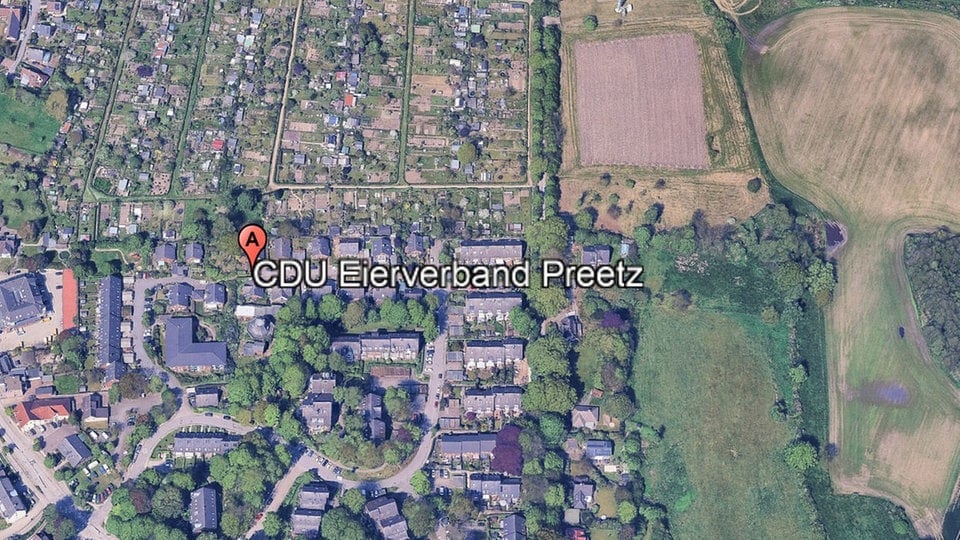
In a peculiar and widely reported digital incident, numerous offices of Germany's Christian Democratic Union (CDU) across multiple states suddenly found themselves rebranded as "Eierhaus" – or variations thereof – on Google Maps. This digital alteration wasn't confined to a single location; it spread across Sachsen, Sachsen-Anhalt, Thüringen, Hamburg, Berlin, and Brandenburg, sparking both bewilderment and amusement. The unusual renaming, which included the Dresden Landtag and the Hamburg CDU headquarters, left many questioning the motives behind what appeared to be a coordinated cyber-stunt. Understanding the 'Eierhaus' phenomenon requires delving into the intricate intersection of digital activism, political satire, and the vulnerabilities of crowdsourced information platforms like Google Maps.
The core of the mystery surrounding the CDU 'Eierhaus' Google Maps: Nationwide Renaming Mystery lies in deciphering whether this was merely a prank, a pointed political statement, or perhaps a blend of both. This incident highlights the growing importance of online reputation management for political parties and the creative, albeit sometimes disruptive, ways in which individuals and groups can express dissent or amusement in the digital age. The widespread impact of the CDU 'Eierhaus': Google Maps Prank or Political Statement? incident certainly underscores the power of digital platforms to shape public perception, even through seemingly minor alterations.
A Nationwide Digital Alteration: The 'Eierhaus' Epidemic on Google Maps
The "Eierhaus" phenomenon was far from an isolated incident. Reports surfaced from various corners of Germany, indicating a broad and possibly coordinated campaign. In the eastern states, several CDU business offices in places like Eisleben (Sachsen-Anhalt), Delitzsch (Sachsen), and Erfurt (Thüringen) were affected. Even the highly symbolic Landtag in Dresden appeared under the new, unofficial designation. This initial wave of renaming quickly expanded beyond regional boundaries.
The prestigious Hamburg CDU headquarters, for instance, prominently displayed "CDU Eierhaus" in its address line on the popular mapping service. The capital, Berlin, also fell victim to the digital prank, with locations such as the CDU district association in Berlin-Kreuzberg showing up as "CDU Eierhaus Berlin-Kreuzberg." Other affected sites in Berlin included the CDU faction in the Treptow-Köpenick district assembly, the local district association, and the Neu-Tempelhof local association. Brandenburg, too, experienced the widespread renaming; the state office in Potsdam became "CDU buntes Eierhaus - Landesverband Brandenburg," while several district associations across the state were similarly adorned with the "Eierhaus" moniker, sometimes with colorful adjectives like "buntes Eierhaus."
The sheer scale and consistency of the renaming suggest more than random, individual acts. Google Maps, like many online platforms, relies on a combination of official data and user-generated contributions to maintain its vast database. While this crowdsourcing model helps keep information current, it also presents a vulnerability to malicious or mischievous edits, as demonstrated by the 'Eierhaus' stunt. Google's standard response, when queried about such incidents, typically emphasizes their efforts to maintain accuracy and encourages users to report erroneous information via their feedback button. However, the rapidity and breadth of this particular renaming spree underscore the challenges in policing user-generated content effectively and immediately.
Tracing the Motives: Beyond a Simple Prank
The immediate question following such a widespread digital alteration is always: Why? While some online defacements are purely for mischief, the specific timing and nature of the "Eierhaus" renaming point towards a more targeted and potentially politically charged motive. The most compelling link to emerge from initial investigations connects the cdu eierhaus google incident to recent protests concerning military conscription in Germany and a controversial placard.
Earlier in March, a student demonstration against conscription in Berlin made headlines, not just for its message, but for a particular sign carried by an 18-year-old. The placard provocatively read: "Merz leck Eier." For those unfamiliar with German colloquialisms, "Eier" (eggs) in this context can be a vulgar slang term for testicles, making the phrase an offensive insult directed at CDU leader Friedrich Merz. Police subsequently initiated an investigation against the young demonstrator on suspicion of defamation of a federal chancellor and the CDU chief.
This incident provides a strong interpretive framework for the "Eierhaus" renaming. "Eierhaus" literally translates to "egg house." Given the recent controversy surrounding the "Merz leck Eier" slogan, it's highly plausible that the Google Maps renaming was a satirical, mocking, or protest-driven extension of this sentiment. By labeling CDU offices as an "Eierhaus," the perpetrators could have intended to subtly – or not so subtly – allude to the insult directed at Merz, thereby associating the entire party's physical locations with a derogatory term. This interpretation aligns with forms of digital activism and "culture jamming" where symbols, names, and platforms are manipulated to convey a political message or critique.
While it's important not to definitively attribute the act without concrete proof of the perpetrators' intent, the strong contextual link to a high-profile political protest makes it difficult to dismiss the "Eierhaus" stunt as a mere random prank. Instead, it appears to be a sophisticated, albeit anonymous, act of digital political expression, leveraging the open-source nature of Google Maps to deliver a message with broad visibility.
The Impact and Response: Digital Defacement Meets Political Poise
The consequences of such a widespread digital defacement, even if temporary, can be significant. For the CDU, the immediate impact included potential confusion for individuals trying to locate their offices and an unwelcome, if fleeting, dent in their online representation. In an age where digital presence is paramount, having your official locations renamed to something nonsensical or derogatory, even for a short period, can be a headache for public relations teams.
Interestingly, the official responses from the CDU varied. The CDU faction of the Dresden Landtag initially chose not to comment officially on the matter. Similarly, the Berlin CDU remained silent on the "Eier-Aktion" at the outset. However, Julian Brüning, the CDU Secretary-General for Brandenburg, offered a more candid and measured response. He stated, "Ein digitaler Scherz ist schnell gemacht - für die echten Herausforderungen in Brandenburg braucht es etwas mehr Substanz" (A digital prank is quickly done - for the real challenges in Brandenburg, something more substantial is needed). Brüning's statement reflects an attempt to downplay the incident, categorizing it as a "digital prank" and pivoting the focus back to what he considered more pressing, "real" political issues. This strategy aims to prevent the incident from gaining undue attention and legitimizing the perpetrators' actions.
From Google's perspective, the incident reiterates the ongoing challenge of moderating user-generated content. While Google Maps strives for accuracy, the sheer volume of information makes it impossible to manually verify every single edit or suggestion. Their reliance on user feedback mechanisms, while democratic, also creates avenues for abuse. The swift correction of these "Eierhaus" names, once reported, demonstrates the platform's ability to react, but also underscores the initial vulnerability.
This episode serves as a powerful reminder for all political parties and public figures about the criticality of active online presence management. It's no longer enough to just have a website; monitoring all digital touchpoints, from social media to mapping services, is crucial. Proactive engagement with online communities and a rapid response plan for digital incidents can mitigate potential damage and turn a challenging situation into an opportunity for demonstrating resilience and tech-savviness. For everyday users of digital platforms, the 'Eierhaus' stunt is a testament to the importance of critical thinking and reporting inaccuracies to ensure the integrity of shared information.
Conclusion
The widespread renaming of CDU offices to "Eierhaus" on Google Maps was more than just a digital anomaly; it was a potent demonstration of modern-day activism leveraging digital platforms. While the immediate cause remains attributed to "unknown individuals," the strong contextual link to recent protests against conscription and a controversial slogan targeting Friedrich Merz suggests a politically motivated act of digital satire or protest. The incident underscored the vulnerabilities inherent in crowdsourced data platforms and prompted varying responses from the affected political party, ranging from silence to a dismissive yet poised declaration about "real challenges." As our world becomes increasingly digital, such "stunts" highlight the evolving landscape of political communication, where online spaces can become battlegrounds for ideas, humor, and dissent. For political entities, vigilance in monitoring their digital footprint and robust strategies for online reputation management are no longer optional but essential components of their public engagement.